Rei Kawakubo’s quiet revolution didn’t just reshape fashion — it reshaped the soul of London.
🌫️ I. The Whisper That Became a Movement
There’s a hum that runs through the world of fashion — the soft sound of rebellion dressed in black.
It began in Tokyo, where Rei Kawakubo, a woman who never studied design, built a brand that defied every rule.
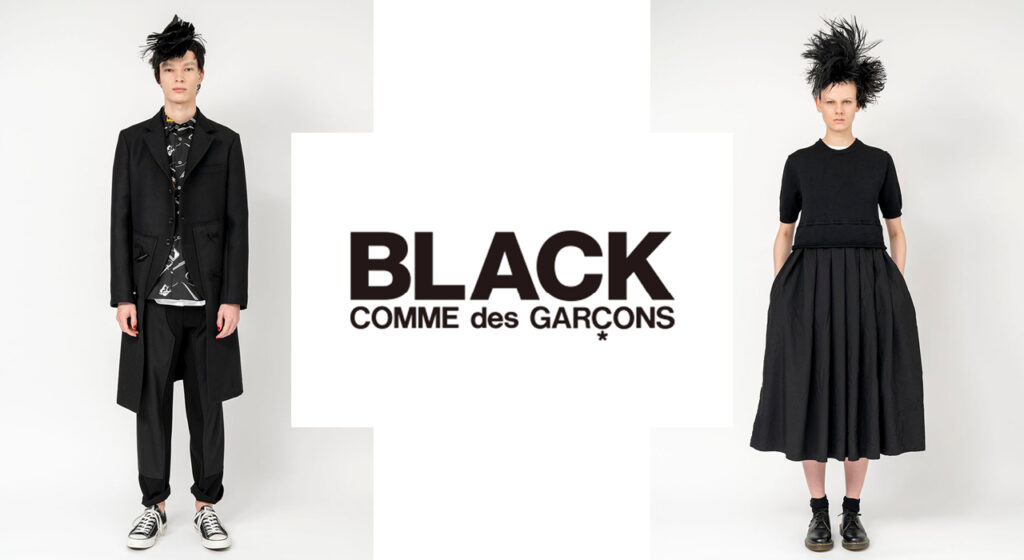
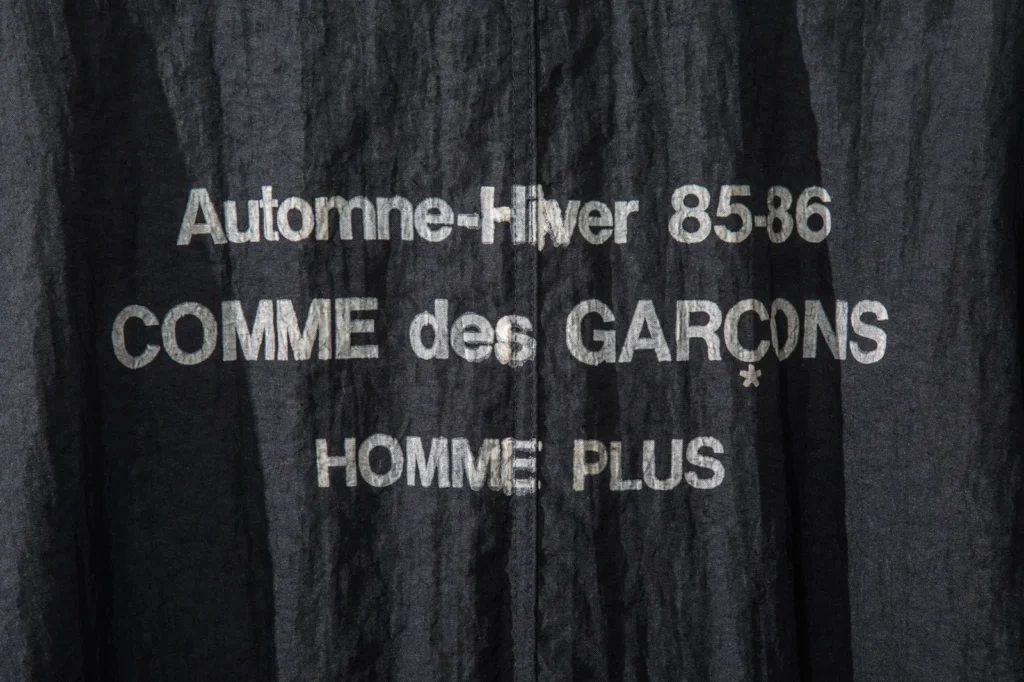
Comme des Garcons was never about clothes; it was about emotion — about challenging the idea that beauty needed symmetry or polish.
When Kawakubo’s designs arrived in Paris in the early 1980s, they caused shock and awe in equal measure.
Torn seams, padded silhouettes, asymmetrical jackets — all whispered one message: perfection is boring.
But London — chaotic, creative, and a little rough around the edges — was waiting for her.
And it would become her most beloved laboratory.
🌁 II. London: A City Built for Contradiction
If Tokyo is precision, Paris is theatre, and New York is ambition — then London is pure instinct.
A city where punk met couture, where rebellion wears a tailored coat.
By the early 2000s, London’s creative energy was boiling over. The old world of luxury retail felt sterile, predictable.
Fashion didn’t need another boutique. It needed a catalyst.
Kawakubo saw that gap — a space between art and commerce, rebellion and refinement — and she stepped in.
In 2004, she opened a place that would forever change the way the world shopped:
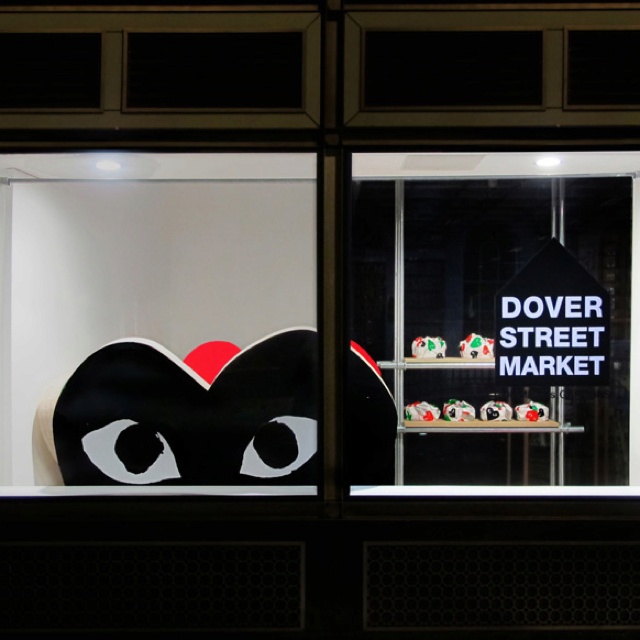
Dover Street Market.
🏛️ III. The Birth of Dover Street Market: A Controlled Explosion
Imagine walking into a space where nothing matches, yet everything makes sense.
That’s Dover Street Market.
It wasn’t designed like a store — it was composed like a poem.
Concrete, corrugated steel, and recycled wood formed its bones.
Each designer inside — Gucci, Rick Owens, NikeLab, Simone Rocha — was given freedom to build their own microcosm.
It felt industrial, spiritual, unpredictable.
Kawakubo called it “beautiful chaos.”
“Creation comes from tension,” she once said.
Dover Street Market is that tension, alive and breathing.
🔥 IV. A Living, Breathing Work of Art
Unlike traditional stores, DSM refuses stillness.
Twice a year, it tears itself apart and rebuilds — new walls, new installations, new energy.
This ritual, called “New Beginning,” is a kind of retail rebirth.
Each transformation is radical yet respectful — a reminder that creativity can’t exist without destruction.
The space moves, evolves, reinvents.
Every visit feels like entering another dimension — familiar, but different in ways you can’t quite name.
🎭 V. Shopping, Reimagined
Stepping into Dover Street Market isn’t shopping; it’s immersion.
The lighting is soft, the music is unpredictable, and every floor feels curated like an art exhibition.
A Comme des Garcons jacket might hang beside a hand-painted sculpture or a sneaker collab that dropped that morning.
There’s no hierarchy. Luxury and streetwear sit side by side.
The staff are quiet guides, not sellers. The customers are explorers.
And then there’s Rose Bakery — the calm within the storm.
The scent of espresso and the sound of cutlery add a heartbeat to the space, turning the avant-garde into something intimately human.
🌍 VI. From Mayfair to the World
The experiment worked — brilliantly.
What started on a narrow street in Mayfair became a global philosophy.
Today, there are Dover Street Markets in:
- Tokyo (2006) — where it all began anew
- New York (2013) — architectural, monumental, fiercely urban
- Beijing (2018) — a cultural crossroads
- Los Angeles (2018) — artistic and sun-drenched
- Singapore (2021) — refined minimalism, tropical precision
In 2016, the London flagship relocated to Haymarket, inside a vast 120-year-old building.
It was bigger, bolder, more unpredictable — but the soul of Dover Street remained untouched.
💬 VII. London’s Affair with Comme des Garcons
No city mirrors Comme des Garcons quite like London does.
Both are built on contradiction — intellectual yet instinctive, rebellious yet poetic.
Kawakubo’s philosophy resonated with British creatives from the start.
Designers like Simone Rocha, Molly Goddard, and Craig Green carry traces of her influence — the idea that imperfection can be emotion, and structure can be freedom.
For London’s artistic underground, Dover Street Market became more than a shop.
It became a community, a meeting point for the beautifully misunderstood.
🧩 VIII. Collaboration as Culture
Collaboration isn’t a trend at DSM — it’s the foundation.
Every designer invited into the space becomes part of its evolving conversation.
From Thom Browne’s theatrical suits to Supreme’s raw youth culture, every installation tells a story about coexistence.
Luxury beside street. Concept beside casual.
DSM doesn’t divide — it unites.
It created a new language for retail — one built not on status, but on spirit.
🌸 IX. The Playful Heart of the Brand
For all its high-concept abstraction, Comme des Garcons also knows how to smile.
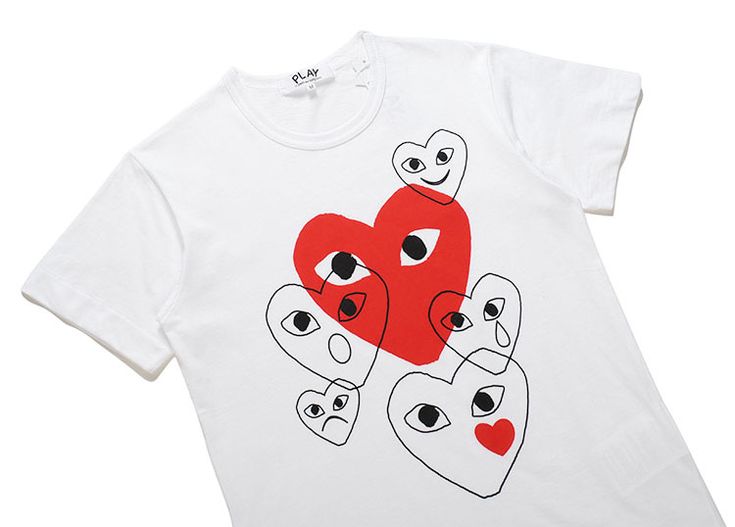
Enter Comme des Garcons Play — the line launched in 2002 with its now-iconic red heart logo by Filip Pagowski.
Play is casual, friendly, and universal — yet it carries the same DNA of thoughtfulness and subversion.
Through Dover Street Market, Play became a global symbol of wearable art.
It proved that you could be playful and philosophical all at once.
🕰️ X. The Legacy: A Philosophy of Constant Becoming
Twenty years after its arrival, Comme des Garcons in the UK remains a testament to creative courage.
Through Dover Street Market, Kawakubo didn’t just redefine retail — she redefined what fashion means.
Her work stands against fast fashion, against predictability, against conformity.
It’s about process, not product. About feeling, not fame.
“The only meaning in life,” Kawakubo once said, “is found in creation.”
And creation, in her world, is never finished.
🖋️ XI. Conclusion: London’s Ongoing Love Story
Comme des Garcons in the UK is not a chapter in fashion — it’s an ongoing novel.
A dialogue between rebellion and refinement, commerce and creativity, destruction and rebirth.
Dover Street Market is London’s mirror — imperfect, restless, alive.
Every season, it changes its skin, but its spirit never fades.
In a world that rushes toward the next thing, Kawakubo teaches us the beauty of pause — the power of not knowing what comes next.
And so, amid the hum of Haymarket, London still listens —
to the soft sound of beautiful chaos, whispering in the language of Comme des Garcons.